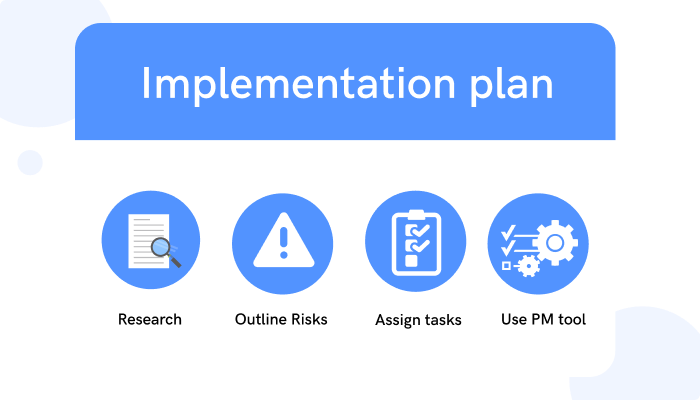
Creating a plan is an important part of success in any endeavor. A comprehensive plan should include goals, objectives, and strategies for achieving those objectives. Implementation of the plan requires careful consideration of resources, timelines, and budgeting. This article will discuss effectively implementing your plan by outlining the necessary steps involved in its successful execution.
The first step in implementing a plan involves assessing available resources. Resources may include personnel, technology, funding, and other assets that can be used to achieve the desired outcomes. It is essential to have a clear understanding of what these resources are before beginning implementation so that they can be properly utilized during this process.
Next, it is critical to establish realistic deadlines and budgets based on the available resources. Timelines need to reflect both long-term goals as well as shorter-term milestones needed to achieve them successfully. Additionally, budgets must factor in all costs associated with implementation such as labor expenses or materials needed along the way. By carefully planning out these details prior to starting implementation, one can ensure that their efforts remain effective throughout the entire process.
Goal Setting
Achieving success involves implementing a well-planned approach, which starts with goal setting. Whether in the business world or in personal life, goal-setting is one of the most important steps to achieving goals and fulfilling aspirations. The process of deciding what you want to achieve begins by understanding your current position and then developing objectives that will move you toward your desired outcome.
Creating a successful goal-setting strategy requires careful consideration of any potential pitfalls along the way. Time management techniques can be used to break down big goals into smaller ones while staying on track with deadlines. Developing achievable targets also helps build confidence as each milestone is achieved and encourages further progress toward the final goal. Utilizing tips such as writing down plans and dividing tasks into manageable sections is vital for creating an effective plan of action.

Reviewing milestones regularly allows for reflection on how far has been come and how much further there is left to go – similar to balancing a set of books every month for an accountant. This provides valuable insight into areas where adjustments may have to be made either in terms of resources or timeline expectations so that goals can be reached successfully without sacrificing quality or delaying delivery dates. With this rigorous review system firmly in place, it’s now time to prioritize tasks accordingly and ensure smooth implementation according to plan.
Prioritizing Tasks
Prioritizing Tasks When attempting to achieve a goal, task prioritization is key. It involves ranking tasks in order of importance and urgency so that the most important ones are completed first. This ensures that resources are being used effectively when working towards objectives and prevents any unnecessary delays. Task organization also plays an important role here – having clear plans with specific deadlines can help break down complex goals into smaller more achievable targets.
Delegating tasks to team members or outsourcing them if needed helps spread some of the workloads while ensuring those involved have the necessary skillset and knowledge base required for the job at hand. Scheduling tasks accordingly with adequate time allocated to complete each one further increases efficiency during implementation stages as well as provides an added sense of control over what needs to be done on a day-to-day basis.
Task prioritization does not only ensure success but also creates accountability within teams which motivates individuals to deliver results in a timely manner. Understanding how long certain tasks take allows for better estimations of future projects making goal setting easier and more efficient in the long run. With this structure firmly established, next comes the challenge of managing time efficiently to stick to schedules…
Time Management
Time management is essential when implementing a plan. By allocating time appropriately to tasks and projects, it allows for better organization of goals and objectives as well as improved efficiency in meeting deadlines. Task planning and goal tracking can help manage the workload by providing an overview of what needs to be done while also allowing the identification of any potential risks or issues that may arise along the way. This makes project planning easier since there is a clear timeline available to refer back to which helps identify where resources should be allocated for maximum effectiveness.
For larger-scale plans, breaking them down into smaller chunks with set milestones along the way can make them more achievable instead of feeling overwhelmed by such a daunting task at hand. With this structure now firmly established, adhering to timelines becomes much simpler through consistent monitoring and periodic checkpoints throughout the implementation stages. These checkpoint reviews are important in order to assess the progress being made and if necessary take corrective action accordingly so that targets remain on track.
Sticking to schedules demands discipline but with efficient time-management practices, teams have a greater chance of staying within budget while achieving desired results. It takes practice and commitment but once mastered, it provides individuals with valuable skillsets they can carry forward onto future endeavors – giving them an even stronger foundation from which to work when resource allocation comes into play…
Resource Allocation
Resource Allocation is a critical component when implementing any plan. It involves the careful management of resources in order to get the best results within budget, as well as identifying cost-saving opportunities that may be available during the implementation stages. When determining resource allocation needs, there are several tools and processes which can help with budget planning:
• Budget Forecasting – Predicts how much money will need to be allocated for each phase of the project based on current trends and anticipated costs.
• Resource Estimation – Estimates all necessary resources required to complete tasks, such as personnel or materials needed.
• Cost Analysis – Analyses overall budget figures to ensure accuracy and identify potential areas for savings.
• Risk Management – Evaluates risks associated with certain decisions or activities to ensure appropriate mitigation strategies have been put into place if something goes wrong.
• Performance Measurement – Measures performance against targets set out at the beginning of the project in order to assess the progress being made and whether changes or adjustments need to be implemented accordingly.
These toolkits provide valuable insight into resource-allocation needs while also helping teams remain organized throughout implementation cycles by tracking projects and goals more effectively – allowing them to stay within budget without compromising quality standards along the way. With these practices now firmly established, it’s time for teams to turn their attention toward creating an effective timeline for execution…
Creating A Timeline
Creating a timeline is an essential part of any implementation plan. It serves as the foundation for goal-setting, task allocation, and ultimately, project success. As the saying goes “A goal without a plan is just a wish”– meaning that having an established timeline helps to ensure objectives are met in a timely manner.
When creating a timeline, it’s important to consider key elements such as milestones, deadlines, and other factors which may affect progress along with allowing ample time for unforeseen delays. This process should involve all stakeholders so that everyone can agree on what needs to be done and when – ensuring tasks remain realistic and achievable within the allocated timeframe. Timeline management also involves monitoring performance against targets set out initially – making sure teams stay on track or adjust expectations if required by circumstances beyond their control.
Finally, resource allocation must be taken into consideration when developing timelines as this will determine how many resources need to be assigned to each activity throughout its duration. By taking these steps into account during timeline creation, teams can keep projects moving forward while maximizing overall efficiency at the same time.
With careful planning now complete, it’s time to begin establishing benchmarks.
Establishing Benchmarks
Establishing benchmarks is the next key step in implementing a plan. Benchmarking provides an opportunity to assess progress against predetermined goals or objectives, allowing teams to measure their success towards goal attainment and achievement. Setting milestones along the way helps keep team members focused on task completion by providing tangible reminders of what needs to be done at each stage of the project. These can then be used as reference points when monitoring performance over time – making it easier for teams to track progress between milestones and identify any areas that may need improvement.
Target setting is also important during this phase as it allows teams to set realistic expectations from the outset and adjust them accordingly if needed. This helps ensure projects stay on course without sacrificing quality due to unrealistic timelines or resource constraints. It’s also essential for ensuring the successful completion of tasks within budget and on schedule – helping manage risk more effectively throughout the process.
By putting these benchmarking tools into practice, stakeholders are able to better understand how their efforts are contributing to overall project success while keeping resources in check. Through careful planning and consistent monitoring, teams can remain accountable with confidence knowing they’re working towards established targets and achieving desired outcomes efficiently. With benchmarks now firmly in place, attention turns towards tracking performance…
Monitoring Progress
Once benchmarks have been established, monitoring progress is the next essential step in implementing a plan. Progress tracking helps to measure performance against set objectives and goals as teams work towards the completion of tasks. This allows them to identify any areas requiring adjustment so they can take corrective action if needed. Performance tracking also provides visibility into how resources are being used – ensuring that projects stay on track without sacrificing quality due to unrealistic timelines or budget constraints.
Goal monitoring further facilitates success by providing tangible reminders of what needs to be done at each stage along the way. This ensures that team members remain focused on task completion while helping manage risk more effectively throughout the process. Task monitoring makes it easier for stakeholders to understand how their efforts are contributing to overall project success and keeps resources in check.
By putting these progress-monitoring techniques into practice, teams can assess whether outcomes align with expectations from the outset and adjust accordingly if required. Through careful planning and consistent review, teams can remain accountable with confidence knowing they’re working towards desired targets and achieving results efficiently. Moving forward, attention turns towards adjusting strategies…
Adjusting Strategies
Once progress is being monitored, it’s time to turn attention toward adjusting strategies. Re-evaluating existing plans and making tactical shifts are necessary for optimizing success when desired goals aren’t immediately met. Refining objectives may be required if the scope of a project has changed or external factors have had an impact on outcomes. Modifying plans according to new insights can also help teams stay agile in their approach while adapting approaches where needed.
It’s important that teams remain open-minded when re-assessing processes and strive to identify areas where changes could benefit performance and efficiency. This helps them focus resources on specific tasks more effectively which can result in considerable gains over time. Additionally, staying flexible means they will be better prepared to handle any unexpected challenges that arise along the way – something essential to the successful implementation of any plan.
When done right, revising strategies as results come in allows teams to respond faster with greater accuracy than ever before, enabling them to work smarter rather than harder at each stage of the journey. With this kind of agility comes tangible rewards such as improved collaboration between stakeholders and decreased risks from unseen circumstances – setting everyone up for success no matter what lies ahead. Moving forward, celebrating successes becomes key…
Celebrating Successes
Once the plan is underway, it is important to recognize and reward accomplishments along the way. Celebrating successes can provide a sense of accomplishment for everyone involved and help build momentum toward future goals. A milestone-based reward system with clear criteria for recognition can be used to ensure consistent appreciation throughout the team’s journey. This creates an incentive structure that rewards high performance while still providing recognition for good effort even when results are not as expected or desired.
In addition to tangible rewards, heartfelt expressions of gratitude from leaders in the organization go a long way in motivating team members. Unconditional appreciation helps foster trust among colleagues and reinforces their shared commitment to achieving success together. It also sets an example of open communication which encourages people to share ideas proactively without fear of repercussion if those ideas don’t work out perfectly right away.

The value of celebrating achievements should not be underestimated: it helps sustain morale during difficult times, increases engagement within teams, and serves as a reminder that progress is being made despite any challenges encountered along the way. With this kind of positive reinforcement, teams will have all they need to stay motivated while continuing on their path toward the successful implementation of the plan.
Reflection And Revision
Once the plan has been implemented and success celebrated, it is important to take a step back and reflect on the overall strategy. Reflection allows for a meaningful evaluation of how well the plan was executed in comparison to its intended objectives. This can be done by looking at each goal individually as well as assessing the process used to reach them. It also provides an opportunity to identify any areas where improvement or revisions may need to be made in order to maximize future results.
The reflection stage should include an honest analysis of both successes and failures during implementation – what worked effectively, what could have been improved upon, and why particular decisions were made along the way. By taking this critical approach, teams can gain valuable insights into their progress that will inform any necessary adjustments needed going forward. This could involve anything from minor tweaks in processes or tactics to major changes in overall strategy depending on the situation.
Ultimately, when reflecting on past performance, it’s important not only to look back but also to consider how these learnings can shape future goals and plans. Evaluating prior actions enables teams to understand which approaches are most effective for achieving desired results so they can apply those same principles next time around for even better outcomes. Doing so helps ensure that every effort taken leads closer to the successful completion of all goals within a project or initiative.
Frequently Asked Questions
Setting realistic yet challenging goals is critical to success in any area of life, whether it involves personal or professional endeavors. Goal setting and planning include a variety of steps that should be taken for successful goal achievement. These include determining specific objectives, creating an action plan, having accountability measures, evaluating progress along the way, and making necessary adjustments as needed.
When developing goals, it is essential to establish both realistic expectations as well as challenging targets. Realistic goals are achievable within the current parameters such as time frames and resources available while still pushing those boundaries so growth can occur. Attainable goals provide motivation through positive feedback when successes are achieved. Conversely, overreaching goals without proper preparation may lead to frustration due to continual failure and lack of tangible results.
Goal evaluation also plays a vital role in goal setting/planning processes; this helps determine if goals need adjustment or readjustment based on performance metrics and other indicators. Regular evaluations will help identify areas needing improvement which will ultimately increase the likelihood of achieving set targets in the desired timeframe with minimal effort expended during implementation.
It is important to remember that goal setting requires dedication and consistency from all stakeholders involved; by properly defining realistic but challenging goals upfront everyone has clear expectations about what tasks must be done to ensure project success – resulting in better outcomes overall for all parties involved
Task prioritization is an important part of effective time management. It involves organizing and scheduling tasks according to their importance, urgency, or relevance in order to maximize efficiency during the implementation phase of a plan. There are various methods for task prioritization that can be used when deciding which tasks should have priority over others.
To prioritize tasks effectively, one must consider the decision-making process based on three key factors: importance, urgency, and relevance. Importance refers to how much value the task will bring to achieving the overall goal; urgency measures how soon it needs to be completed; and relevance relates to how connected the task is with other goals or objectives. Each factor may require careful consideration before determining its place within the scope of a project’s timeline and budget.
When choosing which tasks need to be given more focus than others, there are several approaches that may prove useful. One approach involves using a matrix-style system such as Eisenhower’s Urgent/Important Principle, where tasks are categorized into 4 quadrants – urgent & important, not urgent but important, urgent but unimportant, and neither urgent nor important – allowing for easier evaluation and comparison across all projects or plans. Additionally, another method may involve creating lists or breaking down larger tasks into smaller chunks so they can be ranked accordingly by importance or urgency. Finally, setting deadlines for each task prioritizes them further while helping provide clearer direction toward completion.
In sum, proper task organization and efficient decision-making come together in order to help prioritize different tasks correctly when implementing any plan. By taking into account these 3 core aspects – importance, urgency, and relevance – along with additional techniques such as Eisenhower’s principle or list creation; one can make informed decisions about what requires attention first for the successful execution of the said plan.
Deciding how much time to allocate to each task is an important factor in successful goal setting. Time management and task allocation are essential components for any plan or project, as they provide the foundation for efficient goal tracking and benchmark tracking.
When it comes to allocating specific amounts of time towards tasks, there are several approaches that can be taken in order to ensure optimal results. The first step is to identify which tasks have priority over others – this will help determine the amount of time needed for completion. Additionally, breaking down complex tasks into smaller steps can make them easier to manage, thus allowing more accurate estimation of time requirements.
Furthermore, creating a timeline with realistic deadlines is useful when determining how long should be spent on various activities. This serves as a guideline so resources can be used efficiently while still achieving desired goals within a specified timeframe. Setting up milestones also helps track progress along the way and allows adjustments if necessary.
It is possible to optimize task allocation by taking advantage of available tools such as scheduling software or calendar applications which enable better organization and visualization of workloads. These solutions allow users to quickly see what needs their attention at the given moment and enable them to adjust plans accordingly. Overall, proper utilization of these techniques will result in improved productivity through better use of available resources and increased motivation when reaching goals faster than expected.
Making sure that goals are met is an important part of any plan. Goal setting, goal tracking, benchmarking, timeline planning, and time management all play a role in achieving desired outcomes. A few key steps can help ensure the successful implementation of a plan:
First, clearly define the objectives to be achieved within the timeframe of the plan. This should include outlining relevant milestones or benchmarks that will signify progress toward completion. Once these have been identified it is possible to create a timeline with realistic expectations for each task in order to stay on track and meet deadlines.
Second, prioritize tasks by importance and allocate resources accordingly so as not to overextend oneself. Establishing routines for completing tasks helps to develop good habits and makes meeting requirements more manageable. Furthermore, having regular check-ins between team members or supervisors can provide support along the way while helping to identify potential issues before they become too difficult to overcome.
Thirdly, evaluating one’s performance against set goals at different intervals allows for adjustments when needed. Monitoring actual versus expected results enables any changes required – such as additional training or outsourcing certain duties –to be implemented quickly in order to remain on target. Additionally, rewards for reaching short-term goals serve as motivation and encourage further efforts throughout the duration of the project. In summary, providing clear direction with achievable timelines gives those involved structure and focus while helping ensure satisfactory delivery of the finished product; something which can only be achieved if sufficient attention is given to goal setting, goal tracking, benchmarking, timeline planning, and time management during execution of the plan.
A recent study has revealed that an astonishing 85% of people do not meet the self-imposed goals they set. If one is not on track to meeting their benchmarks while implementing a plan, it can be beneficial to adjust their goals and reassess the timeline, reallocate resources, review progress made thus far, and revise any strategies being used in order to help reach those ambitions.
When attempting to modify a plan in order for it to be successful, determining which particular aspects need adjusting is key. First, one should consider if their original goal was too ambitious and require them to take smaller steps so as to ensure success. It may also be necessary to reevaluate the time frame within which certain objectives need fulfilling; this could involve shortening or lengthening predetermined deadlines depending on how easily achievable these tasks appear from the initial evaluation. Furthermore, reviewing what resources have been allocated up until this point and considering whether changes are needed can prove advantageous in achieving targets. Finally, assessing strategies employed is imperative when revising plans – does the current method still seem suitable or would another approach produce better results?
In light of all of this information regarding planning, it becomes evident that change is often required during implementation processes in order for objectives to be reached efficiently and effectively. Adjusting goals, reassessing timelines, reallocating resources, reviewing progress made toward milestones, and revising strategies accordingly are all essential activities when aiming for success with regard to completing the projects at hand.
Conclusion
Concluding a plan and implementing it is like running a marathon. Every preparation and every step taken must be planned with precision to reach the ultimate goal without fail. To ensure success, it is essential that realistic yet challenging goals are set, tasks prioritized based on importance, and an appropriate amount of time allocated for each task. On-track progress can be monitored by setting benchmarks along the way and adjusting if necessary to meet those goals. If off track at any point, taking corrective actions as soon as possible should help get back on course in order to complete the journey successfully.
Progressing through this process requires dedication and perseverance; however, with proper planning and execution, even the most ambitious goals can be achieved. It is only through sound judgment of available resources and careful consideration of potential risks that one can traverse their individual path toward accomplishment. Therefore, establishing clear objectives followed by consistent monitoring will ensure that your desired outcome is attained within the specified timeline.
In summary, completing a successful plan requires extensive forethought coupled with unwavering commitment throughout its implementation phase. Taking deliberate steps from start to finish will lead you closer to achieving success while helping you avoid costly errors or delays along the way. By mastering these elements – setting achievable targets, properly scheduling tasks according to priority level, and continuously evaluating results against predetermined benchmarks – you can take control of your future destiny!